Moving a business is a completely different beast to moving house. The stakes are higher, the logistics are more complicated, and you cannot really afford a messy, disorganised moving day when there are clients to deal with, deadlines to hit, and staff who need to be up and running as quickly as possible.
That said, office relocations in Lancashire happen all the time, and the ones that go well have one thing in common: proper planning. Here is what that actually looks like in practice.
Give Yourself More Time Than You Think You Need
Most businesses underestimate how long it takes to plan and execute an office move properly. You are not just moving furniture and boxes. You are coordinating IT infrastructure, notifying clients, updating your address across every platform imaginable, briefing staff, and trying to keep the business ticking over throughout.
Eight to twelve weeks is a sensible lead time for most commercial moves. Smaller offices with fewer complications can sometimes manage it in less, but if you are moving a larger team or a more complex operation, give yourself the breathing room. Trying to rush a business relocation is where things start to go wrong.
Get a Proper Inventory Together Early On
Before you contact any removals company for a quote, do a thorough walkthrough of your current premises and make a list of everything that needs to move. Desks, chairs, filing cabinets, servers, monitors, kitchen equipment, stock, plants in the boardroom, the lot.
This is not just useful for getting an accurate quote. It also forces you to make decisions about what is actually worth taking. A lot of businesses use a move as an opportunity to declutter, get rid of furniture that has seen better days, and start fresh in the new space. Anything you are not taking still needs a plan, whether that is selling it, donating it, or arranging a collection.
Your IT Setup Deserves Its Own Plan
If there is one area where a poorly managed office move will cost you real money, it is IT. Servers being offline longer than expected, phones not routing correctly, broadband not being active on day one; these are not minor inconveniences. For most businesses, they mean lost revenue.
Get your IT team or provider involved early and treat the technology side of the move as a separate project running alongside the physical relocation. Wherever possible, get the broadband live and tested at the new premises before anything else arrives. If your team works on cloud-based systems, make sure everyone knows how to access them from home or a temporary location in case there is a delay getting connected on site.
Label every cable, every port, and every piece of equipment before anything gets packed. It sounds tedious, but the person reconnecting everything at the other end will thank you for it.
Think Carefully About Timing
Moving over a weekend or during a quieter period is the obvious choice, but it is worth thinking beyond just avoiding a Monday morning. Consider your busiest trading days, any upcoming deadlines, client commitments, and payroll runs. A move that lands in the middle of month-end is going to cause far more disruption than one that is timed around it.
For larger operations, a phased approach can work well. Rather than moving everything in one go, you shift departments across one at a time, allowing parts of the business to keep running whilst the rest of the move takes place. It requires more coordination, but it keeps the wheels turning.
Keep Your Staff in the Loop
People handle change better when they are not surprised by it. Tell your team about the move as early as you can, share the timeline as it develops, and be clear about what you are expecting from them. Most office moves require staff to pack up their own workstations, label their equipment, and be ready by a specific time. If nobody has told them that, it is not going to happen.
It is worth appointing a move coordinator in each department, someone who can chase up stragglers, answer questions, and make sure their team is organised and ready. The more responsibility you distribute, the less pressure falls on one person to manage everything.
Sort Out Your New Space Before the Lorry Arrives
One of the most avoidable causes of a slow, chaotic moving day is not having a clear plan for where everything is going at the new premises. If the removal team arrives and nobody is quite sure which room is which, or where the desks are supposed to go, you end up with boxes stacked in corridors and furniture being shuffled around multiple times.
Before the move, draw up a floor plan and share it with your removals company. Mark where each team sits, where the server room is, where the storage goes. If you can walk your removal team through the new space in advance, even better. It saves time, reduces confusion, and means things end up in the right place first time.
Also think about practical access at both sites. Is there a loading bay at the new building? Are there height restrictions on the car park? Will you need to book the lift? These details sound minor but they have a habit of causing real delays if nobody has thought about them beforehand.
Consider Storage as Part of the Plan
Not everything needs to move on the same day, and not everything needs to arrive at the new office immediately. If there is furniture you are not ready to place yet, archived files you want to keep but do not need daily access to, or equipment that will not be needed until phase two of the fit-out, storage is a practical solution.
Using a short-term storage facility alongside your office removal keeps the new premises uncluttered from day one and gives you flexibility over how and when things are brought in. It is a particularly useful option when the new office is still being decorated or fitted out whilst the move is taking place.
We Cover the Length and Breadth of Lancashire
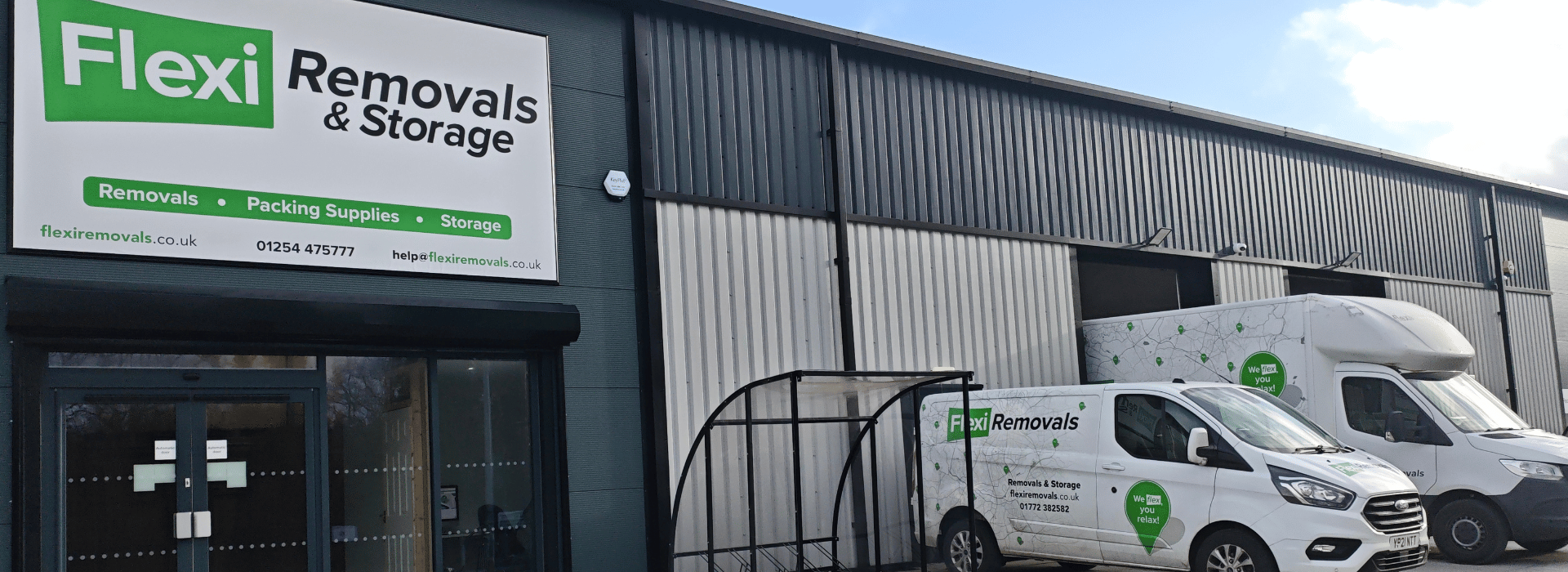
Flexi Removals handles commercial and office removals right across Lancashire. We know the business parks, industrial estates, and town centre offices in this part of the world, and we work around your schedule rather than our own. Whether you are moving a small team across town or shifting an entire office to a new site, we will make sure it is handled properly.
We regularly carry out office removals in Preston, Blackburn, Chorley, Leyland, Burnley, and Accrington, as well as further afield across the North West.
Get in Touch for a Free Quote
If you are planning an office move in Lancashire and want to talk through the logistics, give us a ring or drop us an email. We offer free, no-obligation quotes and are happy to come out and take a look at your current premises before putting anything together.
No two office moves are the same, and we would rather understand exactly what you need before quoting than give you a number that does not reflect the actual job. Get in touch and we will take it from there.